
Mainlanders Register Abu Dhabi Company: A Full Analysis of Conditions, Processes and Precautions

 2025-12-16
 Author:joyce
  Source:Zhuoxin Enterprise
  Current online readers: 1382
 As the capital of the UAE and the economic hub of the Middle East, Abu Dhabi has become the preferred place for mainland investors to expand into the Middle East, Africa and European markets with policy advantages such as zero corporate income tax, no foreign exchange control, and 100 foreign holdings. However, the registration process involves policy differences between the free zone and the local market, and key points need to be accurately grasped.
1. Company type selection
abu Dhabi offers a variety of corporate forms, and mainland investors need to choose according to their business needs:
limited Liability Company (LLC):
ownership structure: at least one local shareholder is required to hold 51% (except for free zones) and foreign investors are required to hold 49%.
Applicable scenarios: suitable for companies that need to enter the UAE local market and cooperate with the government or state-owned enterprises.
Free Zone Companies (FZE/FZC):
shareholding Structure: Allows 100 per cent foreign ownership without the need for a local partner.
Tax benefits: exempt from corporate income tax, personal income tax and customs duties, but the scope of business is usually limited to free zones or international markets.
Typical Free Zone:
ADGM (Abu Dhabi Global Markets): focuses on fintech, asset management, using common law systems.
KIZAD (Khalifa Industrial Zone): Focus on manufacturing, logistics, providing low-cost land and infrastructure.
Branch/Representative Office:
branch: can carry out business activities, the parent company authorization documents are required.
Representative office: market research and brand promotion only, direct profit is prohibited.
2. Core qualification requirements
shareholders and Directors:
at least 1 shareholder and 1 director, either individual or company, without nationality or residence restrictions.
Natural person shareholders are required to provide a passport scan and proof of address for the past 3 months (e. g. water and electricity bills); Company shareholders are required to provide articles of association and business license.
Registered capital:
LLC: Minimum of 150000 dirhams, no actual payment required, but proof of funds required when opening a bank account.
Free zone companies: Registered capital requirements vary from zone to zone, and some free zones have no minimum requirements.
Office Address:
A lease contract or proof of free zone office allocation is required, and the address must meet the municipal planning requirements.
Free zones allow virtual offices, but some industries (such as finance) require physical office space.
Industry Licensing:
involving regulated industries such as healthcare, education, finance, and energy, additional industry licenses are required.
1. Name pre-examination and trademark registration
name specification:
the name should include company type abbreviations (e. g. LLC, FZE), avoid religious, government agency names, and be unoccupied by other businesses.
It is recommended to prepare 3-5 alternative names for preliminary inquiry through the online platform of Abu Dhabi Economic Development Department (ADDED).
Trademark Protection:
after the name is approved, the trademark must be registered with the Ministry of Economy to prevent infringement and is valid for 10 years.
2. Document preparation and notarization
base file:
articles of association (specifying the shareholding structure, management structure, shareholders' rights and obligations).
Business plan (including market analysis, financial forecast, business model).
Lease Contract (Arabic translation and notarization required).
Legal documents:
if a joint venture is involved, a joint venture agreement is required; free zone companies are required to submit specific forms required by the Free Zone Authority.
Notarial Certification:
all non-Arabic documents must be certified by the UAE Embassy or Consulate in China, or translated and certified by the local notary office.
3. Submission of application and review
mainland Registration:
submit an electronic application through the ADDED website or go to the window to submit paper materials.
Free Zone Registration:
submit the application directly to the selected free zone authority.
Key audit points:
integrity of documents (e. g. completeness of shareholder agreements, lease contracts).
Whether the business activities comply with free zone or mainland area regulations.
4. Obtaining license and follow-up procedures
commercial License:
after the audit is passed, a business license valid for one year shall be renewed annually and an audit report shall be submitted.
Bank account opening:
go to a local bank to open an account with documents such as license, articles of association, shareholder passport, etc. Some banks require an initial deposit (e. g., 50000 dirhams).
Tax Registration:
enterprises that meet the requirements for value-added tax (VAT) registration are required to register with the Federal Tax Service (FTA) at a rate of 5%.
Labor permits and visas:
the employment of foreign employees requires a labor permit, a salary that meets industry minimum standards and a 48-hour work week.
Apply for work visas for foreign employees to ensure they are legally working in the UAE.
1, free zone vs urban registration options.
Free zone advantages:
100 foreign ownership, tax incentives, simplified approval process.
Suitable for export-oriented, international business-oriented enterprises (e. g. cross-border e-commerce, technology research and development).
Downtown LLC Advantages:
it can directly enter the local market of UAE and participate in government procurement projects.
Suitable for trade and service industries (such as building materials distribution, logistics and distribution) that require localized operations.
Case comparison:
tech companies choose ADGM free zone:
advantages: 100% foreign ownership, 0% corporate income tax, simplified visa process (3-year residence permit for employees).
Registration period: 12 days, cost about 25000 dirhams (including license fee, notarization fee and agency service fee).
Trading companies choose urban area LLC:
advantages: can directly cooperate with local distributors and enter the government procurement market.
Cost: The registered capital is 100000 dirhams, and the annual rent for the leased office is about 80000 dirhams, but the profits need to be shared.
2, Cultural and Legal Differences
naming taboo:
avoid sensitive words such as "Islamic", "federal", or names associated with religious figures.
Labor Law Compliance:
the employment of foreign employees requires a labor permit, a salary that meets industry minimum standards and a 48-hour work week.
Religious customs:
during Ramadan, you need to adjust your working hours and avoid eating in public places.
3. Ongoing compliance requirements
annual Audit:
all companies are required to engage local auditors to produce financial reports, and Free Zone companies may require International Accounting Standards (IFRS) audits.
License Renewal:
the business license must be renewed 30 days before the expiration of the application, late will face a fine.
Tax declaration:
value-added tax (VAT) registered enterprises are required to submit tax returns on a quarterly basis, and the late penalty is 5%-50% of the unpaid tax.
4. Professional support advice
local Agent:
an urban LLC is required to appoint a local service agent to handle government affairs.
Legal Counsel:
when complex shareholding structures or industry regulation are involved, it is recommended to hire a local lawyer to review the documents to avoid compliance risks.
Financial Advisor:
assist in tax structure planning and use free zone tax benefits to reduce operating costs.
Zhuoxin Enterprise provides agency services such as domestic and foreign company registration, bank account opening, annual tax return, agency bookkeeping, trademark registration, ODI Overseas Investment Filing, etc. If you have any business needs in this area, please feel free to consult our online customer service!







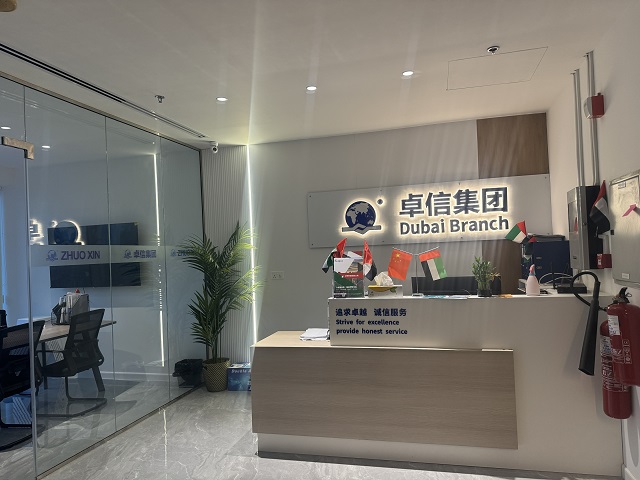
Zhuoxin Consulting relies on its Chinese service network and Dubai executive team to provide professional one-stop business services without communication barriers for Chinese companies to enter the Middle East market. Its business covers company establishment and maintenance, accounting and taxation, bank account opening, PRO services and business services.
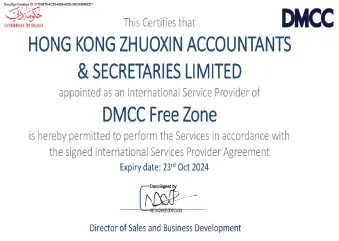
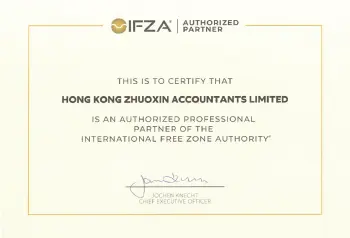
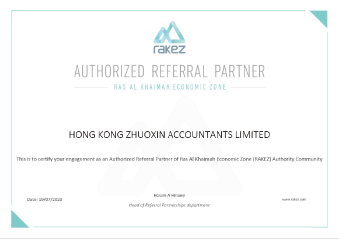
Zhuoxin Consulting has high-quality business resources and maintains close cooperation with many free zones, bankers and tax departments in the UAE to escort your expansion in the Middle East market.


厦门卓信世野信息咨询有限公司 地址:厦门市思明区厦禾路189号银行中心2712B单元
免责声明:本网站与任何政府机构均无关联,我们提供第三方咨询和公司注册支持。